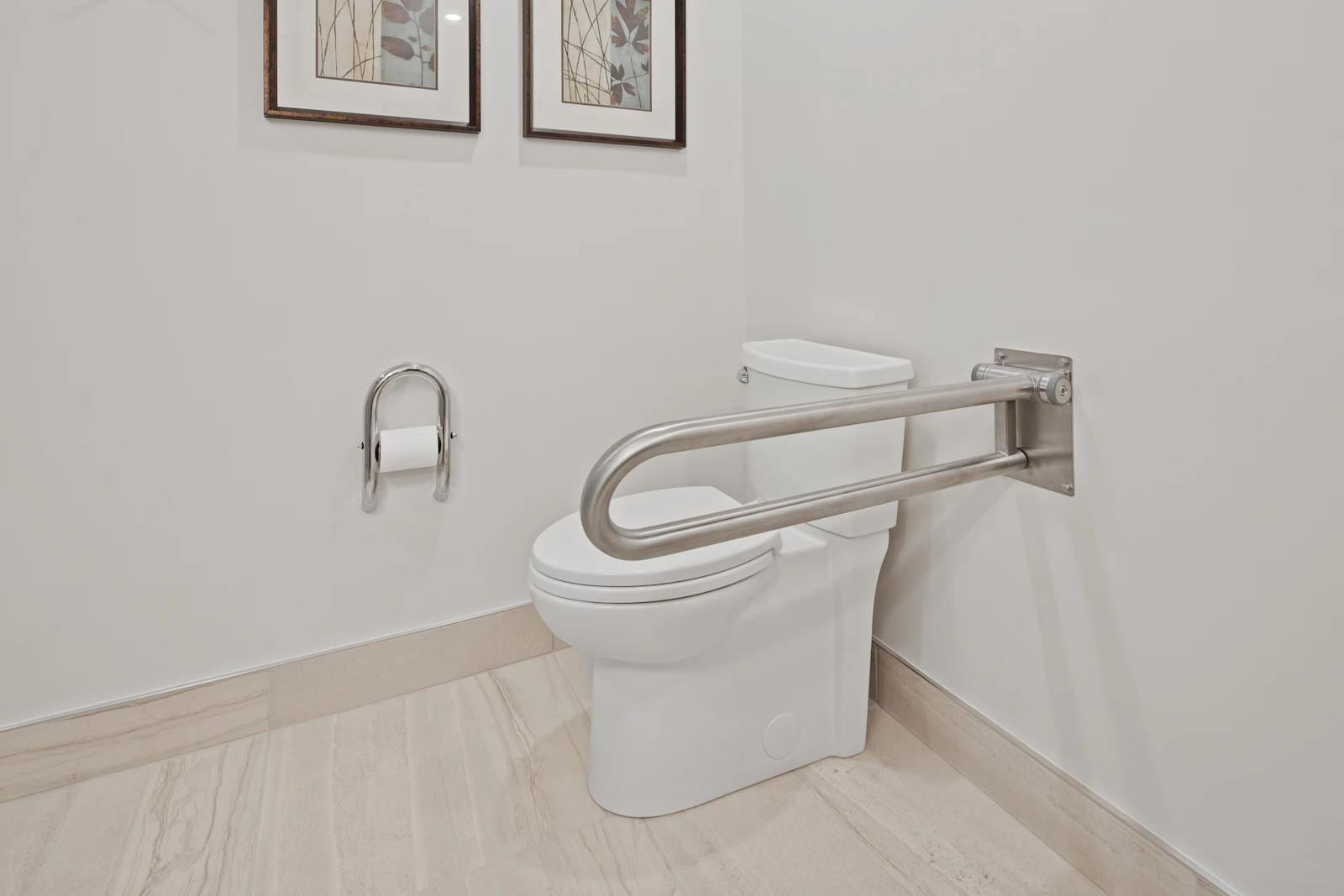
Common bathroom adaptations
- A level-access shower or wet room in place of a bath.
- Grab rails by the toilet, basin and shower.
- A raised or wall-hung toilet at a comfortable height.
- Wider doorways and a door that opens outwards or slides.
- A downstairs bathroom or shower room, sometimes as part of an extension.
- Non-slip flooring and thermostatic controls to prevent scalding.
What is a Disabled Facilities Grant?
A Disabled Facilities Grant (DFG) is a grant from your local council towards changes a disabled person needs to their home, including adapting a bathroom or installing a level-access shower. It does not affect benefits.
The maximum grant is £30,000 in England, £36,000 in Wales and £25,000 in Northern Ireland, and some councils may give more. Disabled Facilities Grants are not available in Scotland, where other support for adaptations exists.
Who can get one and how much
- You or someone living in your home must be disabled; owners and tenants can both apply.
- The amount usually depends on household income and savings over £6,000, and you may need to contribute.
- Grants for disabled children under 18 are not means tested on the parents’ income.
- Landlords can also apply on behalf of a disabled tenant.
How to apply
Apply through your local council. The council may send an occupational therapist or trained assessor to assess what changes are needed, and it must give you a decision within six months. Home improvement agencies, supported nationally by Foundations, can help with the application and with finding contractors.
Talk to the council before any work starts, and agree how and when the contractor will be paid. Payment is usually made in instalments or when the work is finished.
Choosing a fitter
Look for bathroom fitters with experience of accessible bathrooms and wet rooms, and get the occupational therapist’s recommendations in writing to share with them. Read wet room or walk-in shower to compare the options.
Last updated: 14 October 2026


