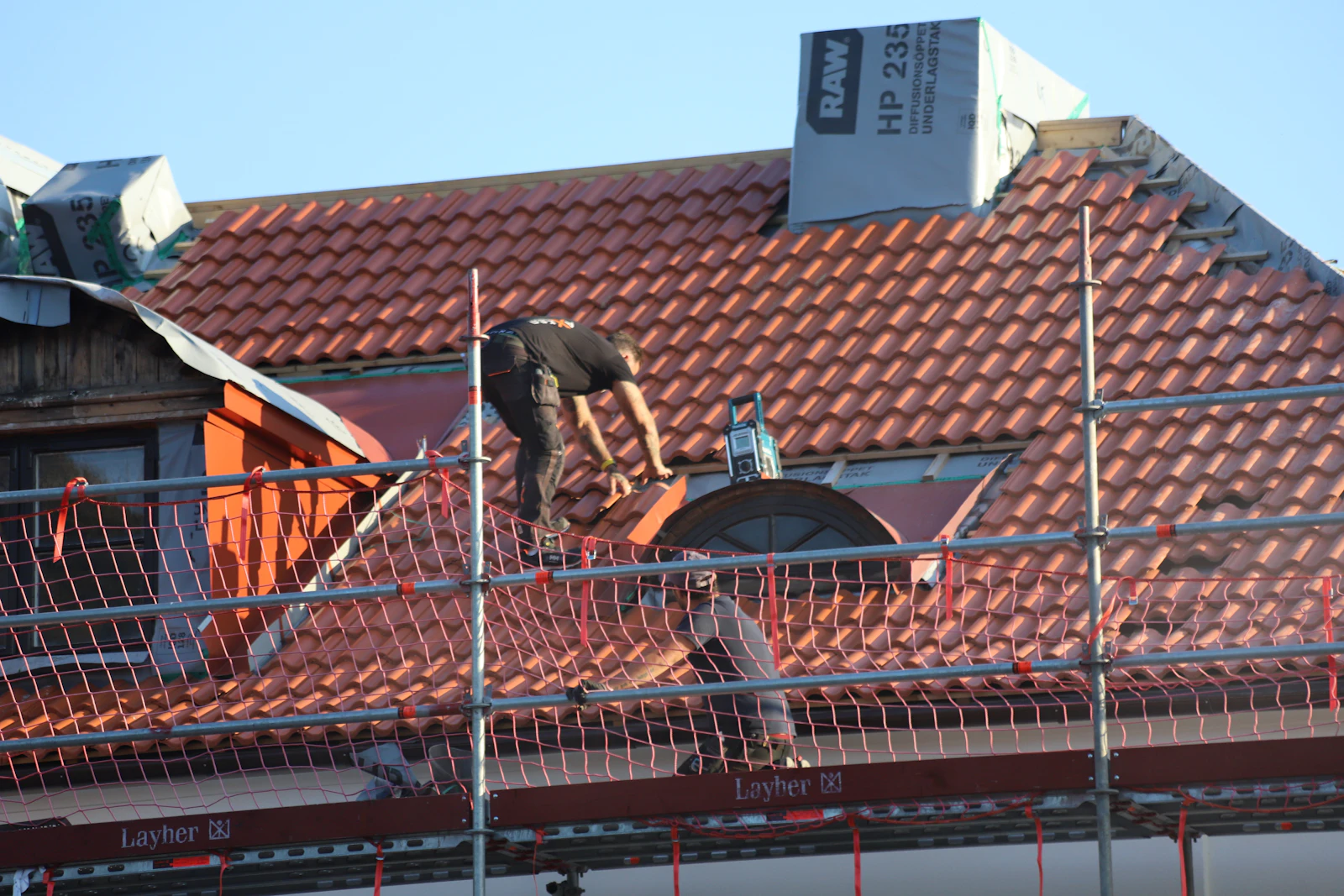
Repairs: usually no application
Fixing slipped or broken tiles, replacing flashing or patching a section of flat roof is normally just a repair. According to the Planning Portal, you normally won’t need a Building Regulations application to repair or re-cover a pitched or flat roof if less than 25% of the whole building envelope (walls, floor, roof, windows and doors) is affected and less than 50% of the roof is affected.
When you do need approval
- The work goes beyond those 25% or 50% limits.
- The work includes structural alterations, such as changing rafters or removing parts of the roof structure.
- The new covering is 15% or more heavier than the old one, for example swapping lightweight tiles for heavy concrete tiles or slate, which may need the structure checking.
- The new covering would perform significantly differently in a fire.
Insulation on bigger jobs
When most of a roof is renewed, Building Regulations can also require the insulation to be brought up to a better standard, where that is practical. That can change the price, so ask your roofer to include it in the quote if it is likely to apply.
How sign-off works
Where approval is needed, either your roofer is registered with a competent person scheme that lets them self-certify roofing work, or an application is made to your local authority or a registered private building control approver. Either way, you should receive a certificate at the end. Keep it with your house documents.
Questions to ask your roofer
- Is this a repair, or does more than half the roof need re-covering?
- Will the job need Building Regulations approval, and who will arrange it?
- Are you registered with a competent person scheme for roofing?
- What written guarantee do you give, and is it insurance-backed?
- How will you access the roof safely, and is scaffolding included?
Compare quotes from local roofers, and read how to spot a rogue doorstep roofer.
Wales, Scotland and Northern Ireland have their own building rules. This guide covers England; elsewhere in the UK, check with your local council.
Last updated: 14 October 2026


