Timing and weather
Exterior painting needs dry weather and surfaces, and temperatures within the range on the paint tin. In the UK that usually means late spring to early autumn. Avoid painting in direct strong sun, if rain is forecast before the paint is dry, or when there is likely to be dew or frost overnight.
Preparation
- Repair cracks in render and brickwork, and treat any algae or mould.
- Wash down and let surfaces dry fully.
- Scrape loose paint from woodwork, fill and prime bare wood. In older homes, take care with old paint that may contain lead; see lead paint in older homes.
- Check for and fix the cause of any damp first, such as leaking gutters.
Choosing paint
- Masonry paint for render and painted brick. Smooth and textured versions are available.
- Exterior wood paint or stain for windows, doors, fascias and cladding.
- Some older homes with solid walls benefit from breathable paints such as mineral or lime-based finishes. Ask your decorator.
- Painting bare brick for the first time is a big decision: once painted, it is hard to go back.
Access and permissions
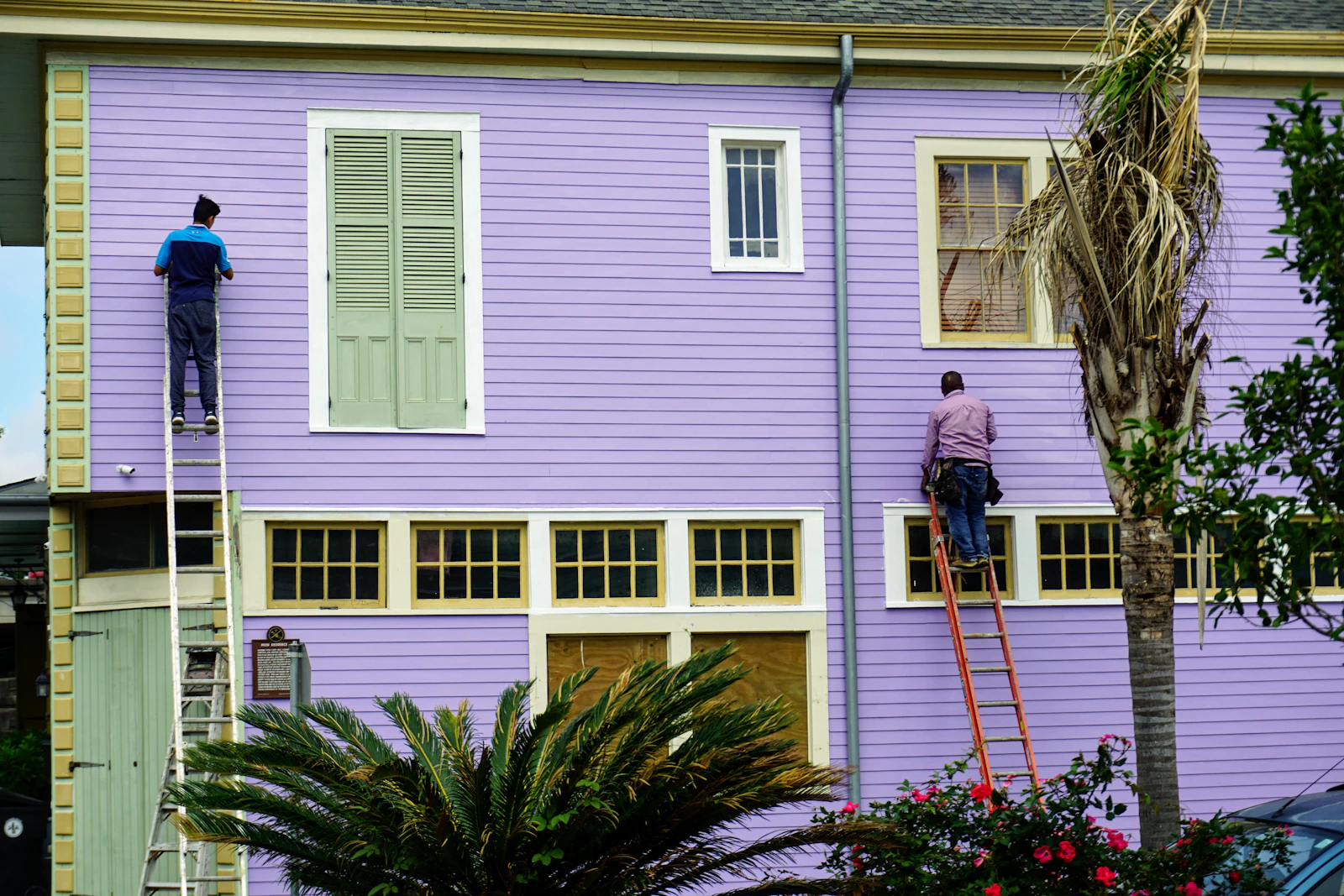
- Ask how your decorator will reach high areas: ladders, towers or scaffolding, and whether that is in the price.
- Scaffolding on the pavement or road usually needs a council licence, which the scaffolding company normally arranges.
- If your home is listed or in a conservation area, changing external colours or materials may need consent. Check with your council first.
Questions to ask your decorator
- What preparation is included, and how many coats?
- Which paint will you use, and what does the manufacturer say about how long it lasts?
- How will you protect windows, plants and paths?
- What happens if the weather turns?
Compare local painters and decorators.
Last updated: 14 October 2026


